
SPC flooring is a multi-layer flooring system designed to provide durability, stability, waterproof performance, and easy installation. But what is actually inside an SPC floor?
Understanding the structure of SPC flooring can help buyers choose the right product for residential, commercial, and high-traffic applications.
The 5 Main Layers of SPC Flooring
A typical SPC flooring product consists of four main layers:

1. UV Protective Layer -- Surface Protection
The top UV protective layer provides an additional protective barrier for the flooring surface.
It helps improve resistance to daily wear, stains, scratches, and fading caused by long-term use and light exposure. It also makes the surface easier to clean and maintain.
This layer is especially useful for flooring used in homes, offices, hotels, retail stores, and other commercial spaces.

2. Wear Layer -- Wear and scratch resistance
Under the UV layer is the transparent wear layer.
This layer protects the decorative pattern from everyday use, including foot traffic, furniture movement and minor scratches.
The most common options are 0.3mm, 0.5mm and 0.7mm. Generally, a thicker wear layer is preferred for areas with heavier traffic.
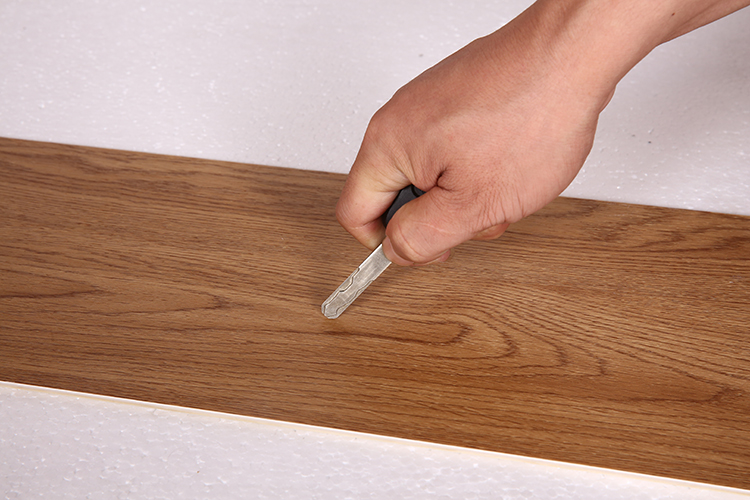
3. Decorative Film -- Color and pattern
This is the layer that gives SPC flooring its appearance.
Wood grain, stone, marble and other patterns are printed onto the decorative film. With modern printing technology, SPC flooring can closely reproduce the look of natural materials while offering more choices in color and design.

4. SPC Core -- Strength and dimensional stability
The SPC core is the main body of the floor.
SPC stands for Stone Plastic Composite. The core is mainly made from mineral powder, PVC resin and stabilizers. Its rigid structure gives the flooring good dimensional stability and helps it resist moisture and deformation.
The quality and formulation of the SPC core have a direct effect on the overall performance of the flooring.

5. IXPE or EVA Underlayment -- Cushioning and sound reduction
The bottom layer is usually an IXPE or EVA foam underlayment.
It adds cushioning under the floor and helps reduce footstep noise. It can also make the floor more comfortable to walk on.
The choice between IXPE and EVA depends on the product specification, application and project budget.

Knowing the structure of SPC flooring makes it easier to understand what you are actually buying.
From the protective UV and wear layers to the decorative film, rigid SPC core and underlayment, every part contributes to the final performance of the floor.
For importers, distributors and project buyers, checking the structure and specifications is just as important as choosing the right color or surface design.


